
Hire employees and contractors in Israel
Outstaffer’s guide to employing in Israel.
Facts & stats
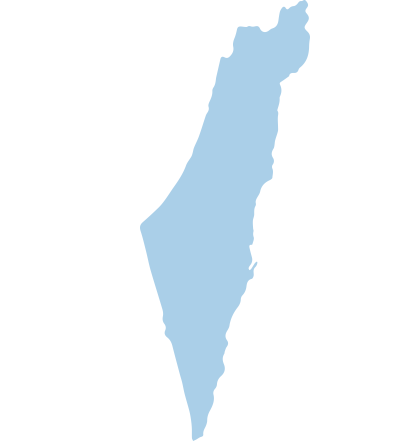
Founded in the aftermath of World War II, Israel is situated along the eastern coastline of the Mediterranean Sea. Although Israel designates Jerusalem as its capital, the majority of nations choose to establish their diplomatic missions in Tel Aviv, which serves as the country’s hub for technology and commerce. Israel encompasses numerous sacred locations, attracting a diverse array of tourists, including those from Jewish, Christian, Muslim, and various other backgrounds, who come to explore its deep historical heritage.
- Capital city
- Jerusalem
- Currency
- Israeli new shekel (₪, ILS)
- Official Languages
- Hebrew, Arabic, English
- Population size
- 9,305,440
- Ease of doing business
- Very Easy
- Cost of living index
- $$$$ (9 of 139 nations)
- Payroll frequency
- Monthly
- VAT - standard rate
- 17%
- GDP - real growth rate
- 3.5%
Tech Talent in Israel
Israel is renowned for its vibrant and innovative tech talent ecosystem. Often referred to as the "Startup Nation," Israel boasts a remarkable concentration of skilled engineers, entrepreneurs, and researchers who have made significant contributions to the global technology landscape. The country's strong emphasis on education and military service, which often involves advanced technology roles, helps cultivate a pool of talented individuals.
Grow your team in Israel with Outstaffer
Looking to employ workers in Israel? Companies hiring in Israel must either own a legal entity in the country or work with a global employment solutions provider, usually one that provides employer of record services. Outstaffer makes it easy for companies of all sizes to employ workers in Israel using our employer of record solution. We can help employ your Israeli team using our local Israeli entity, as well as handle your payroll, benefits, taxes, and local legal compliance.
Minimum wage
In Israel, the minimum wage is 5,300 ILS per month.
Compulsory superannuation contribution
Note that all Australian employers must contribute to the employee’s superannuation fund (Australia's version of a retirement pension).The Australian Super guarantee (SG) is the minimum amount employers must pay to avoid
incurring a super guarantee charge. As of July 1st 2022, the super guarantee is set at 10.5% of an employee’s ordinary time earnings, but this figure is scheduled to increase progressively up to 12% by July 1, 2027.
Payroll cycle
For customers of Outstaffer.com, all employee payments will be made in equal monthly installments on or before the last working day of each calendar month, payable in arrears.
Onboarding time
We can help you get a new employee started in Australia fast. The minimum onboarding time we need is only 14 working days.
Our team ensures your employees are onboarded and paid as quickly as possible while keeping your business compliant with all local employment legislation. The minimum onboarding time begins after the employee submits all required information onto the Outstaffer platform. The onboarding timeline is also dependent upon registration with local authorities.
For all non-nationals of the country of employment, the Right to Work assessment (if applicable) will add three extra days to the total time to onboard. There may be extra time required if we need to follow-up on the right to work assessment.
Please note, payroll cut-off dates can impact the actual first day of employment. Outstaffer platform has a payroll cut-off date of the 10th of the month unless otherwise specified.

Employing in Israel
Without a central constitution, much of Israel’s employment law exists through direct legislation and case law. Employees in Israel do have certain rights employers must observe, including the right for Jews to rest on the Sabbath each week and protections for all workers from being fired while on strike. For companies hiring from abroad, the complexity of Israeli employment law can sometimes feel overwhelming.
Contact Outstaffer to learn more about your options for employing workers in Israel.
Risks of misclassification
Public holidays
Below are national public holidays applicable for all regions in this country
Apr 6
Passover - Day 1 (פסח)
May 26
Shavuot (שבועות)
Sep 25
Yom Kippur (יום כיפור)
Apr 12
Passover - Day 7 (שביעי של פסח)
Sep 16
Rosh Hashanah (ראש השנה)
Sep 30
Sukkot - Day 1 (סוכות)
Apr 26
Independence Day (Yom HaAtzmaut - יום העצמאות)
Sep 17
Rosh Hashanah (ראש השנה)
Oct 7
Simchat Torah (שמחת תורה/שמיני עצרת)
Competitive benefits package in Israel
Our benefits packages in Israel are tailored to fulfill the local needs of your employees. Typically, our packages contain some or all of the following benefits:
 Private health insurance
 Supplemental dental insurance
 Supplementary vision insurance
 Supplemental maternity insurance
 Supplemental screening & vaccine insurance
 Additional paid holidays
 Flexible work schedule
 Employee engagement funds
Taxes in Israel
Learn how employment taxes and statutory fees affect your payroll and your employees’ paychecks in Israel.
Employer
- 3.55-7.6% - National Insurance for residents
- 0.59-2.65% - National Insurance for nonresidents
- 6.50-8.33% - Pension
- 2.50% - Disability
- 7.5% - Study Fund
- 20.64-28.58% - Total Cost of Employment
Employee payroll taxes
- 0.4-7.0% - National Insurance for residents
- 0.04-0.87% - National Insurance for nonresidents
- 3.1-5.0% - Health Levy
- 6% - Pension
- 2.5% - Study Fund
Employee income tax
- 10% (Up to 75,960 ILS)
- 14% (75,961-108,960 ILS)
- 20% (108,961-174,960 ILS)
- 31% (174,961-243,120 ILS)
- 35% (243,121-505,920 ILS)
- 47% (505,921-651,600 ILS)
- 50% (Over 651,600 ILS)
Types of leave
Statutory leave
All employees in Israel with a five-day workweek are entitled to a minimum of 12 days leave per year. Employees with a six-day workweek are entitled to 14 days of leave per year. After four years of employment, the number of vacation days goes up by two per year. An employee can accumulate a maximum of 28 vacation days. There are also nine paid public holidays. Israel also observes four additional holidays where, though not mandatory, many businesses and government offices offer collective or optional paid leave.
Parental and maternity leave
Expecting mothers are entitled to 14 weeks of paid leave with 100% compensation, with an additional 12 weeks unpaid. Weeks 6-14 can be taken by the father instead of the mother.
Sick leave
Sick leave in Israel is accrued at a rate of 1.5 days per month with a maximum of 90 days total.
- For the first day of sick leave, the employee is not entitled to pay.
- On the second and third day, the employee is entitled to 50% of their regular pay.
- From the fourth day onward, the employee is entitled to 100% of their regular pay.
Other leave
Bereavement Leave: In the event of the death of an immediate family member, the employee is entitled to a number of paid grief days determined by the standard of the employee’s community. This leave is capped at seven days. Employees must be a member of a community with a standard seven-day grieving period to be entitled to the full seven days, although this rule is flexible in certain cases. The grief period during which the employee is absent from work is fully paid and is not to be deducted from the employee’s annual vacation or sick leave allowance. Employees become eligible for bereavement leave in Israel after three months of employment.
Employment termination
Termination process
In Israel, employers are obligated to follow a fair and transparent process before terminating an employee. Israel requires employers to invite the employee to a hearing with a document in writing that presents the reason(s) why they would like to proceed with a termination. The employee is given time to respond at the hearing and has the option of appointing a lawyer to present their case. The employer must take into account everything that was said by the employee at the hearing and assess the need for termination again. Companies should consult legal counsel before proceeding with a termination in Israel.
Notice period
During the first six months, one day of notice is accumulated for each month of employment. In addition to the six days accumulated, 2.5 days of notice are accumulated for each month of employment from the sixth month to the end of the first year. Following the first year, termination requires a 30-day notice.
Probation periods
Probationary periods are informally allowed in Israel, usually lasting a few months. While employees are to be treated as full employees with all accorded benefits during the probationary period, employers may dismiss employees during the probationary period more easily than they can dismiss more tenured employees.
Severance pay
Terminated employees in Israel receive one month’s salary for every year of service as severance pay. Employees who have worked for less than one year are not entitled to severance pay. The monthly salary used to calculate the severance payment is the employee’s average salary over the last 12 months. Some employers add a severance component of 8.33% to the employee’s monthly compensation.
Get started with Outstaffer in three easy steps

01. Book a call or sign up
Book a call with one of our Solutions Managers or create your free account. It’s quick, easy, and you’ll be ready to get started in minutes.
02. Add your people
From new hires to your existing team, onboard them seamlessly with our simple-to-use self-serve platform
03. Dedicated onboarding
Our dedicated team is here to guide you every step of the way ensuring you’re confident, supported, and set up for success.