
Hire employees and contractors in Argentina
Outstaffer’s guide to employing in Argentina.
Facts & stats
While Argentina may no longer be one of the wealthiest countries in the world, as it was during the early 1900s, the country remains a top spot for international talent. The largest Spanish-speaking country on Earth, Argentina boasts one of the top economies in South America. Visitors enjoy a community with a passion for great food, but don’t skip the afternoon merienda meal, or you will be hungry before dinner is served after 9 p.m.
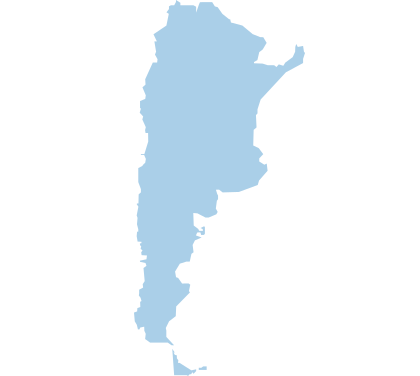
- Capital city
- Buenos Aires
- Currency
- Argentine peso ($, ARS)
- Official Languages
- Spanish
- Population size
- 45,457,630
- Ease of doing business
- Medium
- Cost of living index
- $$ (107 of 139 nations)
- Payroll frequency
- Monthly
- VAT - standard rate
- 21%
- GDP - real growth rate
- -2.1%
Tech Talent in Argentina
Argentina is steadily gaining recognition as a hotspot for tech talent in South America. The country boasts a burgeoning community of skilled software developers, engineers, and IT professionals. Argentine universities produce graduates with strong technical backgrounds, and the government's focus on promoting STEM education further bolsters the talent pool. Cities like Buenos Aires and Cordoba are witnessing a boom in tech startups and innovative tech companies, creating a dynamic ecosystem for collaboration and growth. Argentine tech talent is known for its creativity and problem-solving abilities, making it a valuable contributor to the global tech landscape.
Grow your team in Argentina with Outstaffer
Looking to employ workers in Argentina? Companies hiring in Argentina must either own a legal entity in the country or work with a global employment solutions provider, usually one that provides employer of record services.
Outstaffer can employ your team in Argentina on your behalf through our local legal entity in the country and handle payroll, benefits, taxes, and compliance for your Argentina team. You can also pay contractors now in Argentina with Outstaffer.
Minimum wage
In Argentina, the minimum wage is 20,587 Argentine pesos (ARS) per month.
Overtime pay
Unless a collective bargaining agreement states otherwise, overtime pay is either 50% more than normal wages or 100% if working during a holiday/rest period.
13th month salary
Argentines enjoy an Aguinaldo (SAC - Sueldo anual complementario), otherwise known as a 13th-month salary. This is statutory, and typically paid in two instalments, one in June and one in December. Each instalment must be half of the highest monthly wage the employee received in the previous six months.
Payroll cycle
For customers of Outstaffer, all employee payments will be made in equal monthly instalments on or before the last working day of each calendar month, payable in arrears.
For the mandatory bonus scheme in Argentina known as the 13th month Salary, half the employee’s monthly salary is paid mid-year and the other half at the end of the year.
Onboarding time
Start working with your new Argentinian employee right away with our streamlined onboarding process.
Our team reduces time-to-start while offering an exceptional and engaging employee onboarding experience. We handle the compliance and onboarding woes so you can get started fast.
Once the employee submits the required information onto our platform, the actual onboarding time depends on registration with local authorities, the Right to Work assessment (if applicable) and payroll cut-off dates.
On average, Outstaffer.com onboards new Argentinian talent in under 14 days.

Employing in Argentina
Argentina’s Constitution, several international treaties, employment contract laws, various federal statutes, and collective bargaining agreements all play a role in Argentina’s employment regulations. Any company looking to employ people in the country must abide by all of Argentina’s labor-friendly laws. Because these regulations evolve over time, companies must stay vigilant to stay compliant.
Common questions that could come up during the hiring process include the minimum wage, overtime rates, and guaranteed paid time off.
To employ workers in Argentina, contact Outstaffer to learn more about your options.
Risks of misclassification
Public holidays
Below are national public holidays applicable for all regions in this country
Jan 1
New Year's Day (Año Nuevo)
May 1
Labor Day (Día del Trabajador)
Aug 21
Saint Martin Day (Paso a la Inmortalidad del Gral. José de San Martín)
Feb 20
Carnival (Carnaval)
May 25
May Revolution Day (Día de la Revolución de Mayo)
Oct 13
Tourism Day (Feriado con fines turisticos)
Feb 21
Carnival (Carnaval)
May 26
Tourism Day (Feriado con fines turisticos)
Oct 16
Day of Respect for Cultural Diversity (Día del Respeto a la Diversidad Cultural)
Mar 24
Truth and Justice Memorial Day (Día Nacional de la Memoria por la Verdad y la Justicia)
Jun 19
Tourism Day (Feriado con fines turisticos)
Nov 20
National Sovereignty Day (Día de la Soberanía Nacional)
Apr 2
Day of the Veterans - Malvinas Day (Día del Veterano y de los Caídos en la Guerra de Malvinas)
Jun 20
General Manuel Belgrano Memorial Day (Paso a la Inmortalidad del Gral. Manuel Belgrano)
Dec 8
Immaculate Conception Day (Inmaculada Concepción de María)
Apr 7
Good Friday (Viernes Santo)
Jul 9
Independence Day (Día de la Independencia)
Dec 25
Christmas (Navidad)
Competitive benefits package in Argentina
We can help you get a new employee started in Argentina fast. The minimum onboarding time we need is only 7 working days.
Our team ensures your employees are onboarded and paid as quickly as possible while keeping your business compliant with all local employment legislation. The minimum onboarding time begins after the employee submits all required information onto the Outstaffer platform. The onboarding timeline is also dependent upon registration with local authorities.
For all non-nationals of the country of employment, the Right to Work assessment (if applicable) will add three extra days to the total time to onboard. There may be extra time required if we need to follow-up on the right to work assessment.
Please note, payroll cut-off dates can impact the actual first day of employment. Outstaffer has a payroll cut-off date of the 10th of the month unless otherwise specified.
 Private health insurance
 Supplemental dental insurance
 Supplementary vision insurance
 Supplemental maternity insurance
 Supplemental screening & vaccine insurance
 Additional paid holidays
 Flexible work schedule
 Employee engagement funds
Taxes in Argentina
Learn how employment taxes and statutory fees affect your payroll and your employees’ paychecks in Argentina.
Employer
Unified Social Security Contribution 6%
Social health fund ARS 7,323
Mandatory Health check (one time payment required to validate the employee's health before they start) Income tax is progressive in Argentina, so higher earners pay more. Employers must withhold the appropriate amount of income from employees’ paychecks. Employees and employers both contribute to social security. Employers must contribute to the pension fund system, Medicare coverage, life insurance, and labor risk insurance for all their employees as part of social security. Rates are as high as 17% for the Pension Fund and 0.50% for life insurance. Although Argentina does not have a payroll tax, employers must pay a corporate income tax. The country operates under a progressive tax system in which the income tax rate increases as an employee makes more money. It’s important to make sure you know where employees fall on this scale when setting up Argentina payroll.
Types of leave
Statutory leave
For employees in Argentina, guaranteed leave depends on the employee’s years of service at the company.
- Employees who have worked for an employer for less than 6 months are not entitled to leave (but it can be granted at the employer’s discretion)
- Employees with 0-5 years of service are entitled to 14 days of leave per year.
- Employees with 5-10 years of service are entitled to 21 days of leave per year.
- Employees with 10-20 years of service are entitled to 28 days of leave per year.
- Employees with more than 20 years of service are entitled to 35 days of leave per year.
Holiday leave
The minimum and continued period of paid annual vacations employees are entitled to are:
- 14 calendar days for employees of less than five years service
- 21 calendar days when seniority is between five and 10 years
- 28 calendar days when seniority is between 10 and 20 years
- 35 days for employees with more than 20 years service
Employers may also choose to extend the vacations of their employees.
Employers must also pay salary and other benefits to the employee during annual leave. This payment is calculated by dividing the salary by 25 and multiplying it by the number of days of holiday entitlement. Payment must be made in advance, and leave must begin on a Monday.
All employees are entitled to 15 paid public holidays, plus a few “bridge holidays” added by the Argentine government each year. The amount of holiday entitlement increases with the length of continuous employment, up to a maximum of 5 weeks or 35 days.
Paid parental and maternity leave
Salaried employees in Australia are entitled to four weeks of paid annual leave each year. Shift workers receive an additional week of paid leave, for a total of five weeks per year.
Pregnancy and maternity leave
Employees who give birth in Argentina are entitled to 90 days of leave, paid at 100% salary by the government. This leave can be taken half before the due date and half after, though some employees choose to take their leave unevenly (e.g., 30 days prior to the due date and 60 days after). The employee who gives birth may request additional unpaid leave of up to six months.
Partner/paternity leave
Argentina provides two days of paid paternity leave, paid at 100% salary by the government.
Sick leave
Employees in Argentina are entitled to sick leave depending on years of service at the company. Sick leave changes depending on whether the condition is a work-related illness or injury.
- For illness or injury related to work, the employer must pay the first 15 days of the employee’s salary. After 15 days, insurance covers the remaining costs.
- For illness or injury not related to work, employees with fewer than five years of service receive three months of paid sick leave. Employees with families receive six months. The company is responsible for paying the employee’s salary during this time.
- For illness or injury not related to work, employees with more than five years of service receive six months of paid sick leave. Employees with families receive 12 months. The company is responsible for paying the employee’s salary during this time.
If an employee remains ill after 12 months of leave, the employer may stop making payments but is still required to retain the employee for an additional 12 months. Beyond that timeframe, the employer and employee must discuss long-term disability arrangements or severance pay, depending on the work required and the nature of the disability.
Other leave
- Marriage Leave: Employees are entitled to 10 calendar days of leave for marriage.
- Bereavement Leave: Employees receive three days of leave for the death of a spouse, child, or parent. Employees also receive one day of leave for the death of a sibling.
- Exam Leave: Employees may take up to two days of leave at a time for school exams, up to a maximum of 10 days.
Employment termination
Termination process
Employers in Argentina must provide written notice to terminate an employee. Reasons for termination may include employee conduct, economic factors, or inability to perform the work required. The employer may not modify the reason for termination after the fact, so it is important to provide accurate information throughout the termination process.
Terminations in Argentina can be complicated. Different situations and justifications for termination can have significant effects on factors such as severance pay.
Notice period
Notice periods for termination in Argentina depend on how long the employee has worked for the company.
- During the probationary period, employees are entitled to 15 days of notice.
- Employees with less than five years of service are entitled to one month of notice.
- Employees with more than five years of service are entitled to two months of notice.
In lieu of notice, Argentine employers may pay employees for the same number of days as the notice period. For example, a company in Argentina could terminate an employee with 10 years of service immediately as long as the company paid the employee two months’ wages, in addition to any required severance pay.
Probation periods
By law probation period of new permanent employees is 3 months. We advise against using fixed term agreements. An extraordinary requirement is required by law in order to duly justify a fixed term contract. Continuous use of such fixed term contracts or in excess of legal requirements will automatically convert it into a permanent labor contract. No probation period is required for these fixed term agreements.
Severance pay
Severance pay in Argentina depends on the tenure of the employee and the conditions of dismissal. Employees terminated without cause are entitled to several forms of severance pay, including:
- Seniority compensation, based on the employees highest monthly salary
- Compensation in lieu of prior notice, outlined in the previous section
- Compensation for any remaining days in the month, if the employee is terminated prior to the end of the month
- Compensation for unused vacation time
- Proportional compensation for the 13th month salary
- Special compensation for union delegates in certain cases
- Special compensation for pregnant employees terminated within 7.5 months before or after the due date
- Special compensation for employees on sick leave
Get started with Outstaffer in three easy steps

01. Book a call or sign up
Book a call with one of our Solutions Managers or create your free account. It’s quick, easy, and you’ll be ready to get started in minutes.
02. Add your people
From new hires to your existing team, onboard them seamlessly with our simple-to-use self-serve platform
03. Dedicated onboarding
Our dedicated team is here to guide you every step of the way ensuring you’re confident, supported, and set up for success.